
Abstract: Liuzhou Wuling Automobile Industry Co., Ltd. (WULING) has completed the first delivery of a magnesium alloy frame for an embodied robot, marking its entry into the core components market for embodied robotics. Supported by YIZUMI MGⅡ·Plus series Thixomolding technology,
The project demonstrates a path from CNC prototyping to scalable production of lightweight, high-performance robot frames.
(伊之密镁合金半固态成型装备助力五菱工业突破机器人骨骼轻量化量产瓶颈)
点击红色标题可查看中文文章
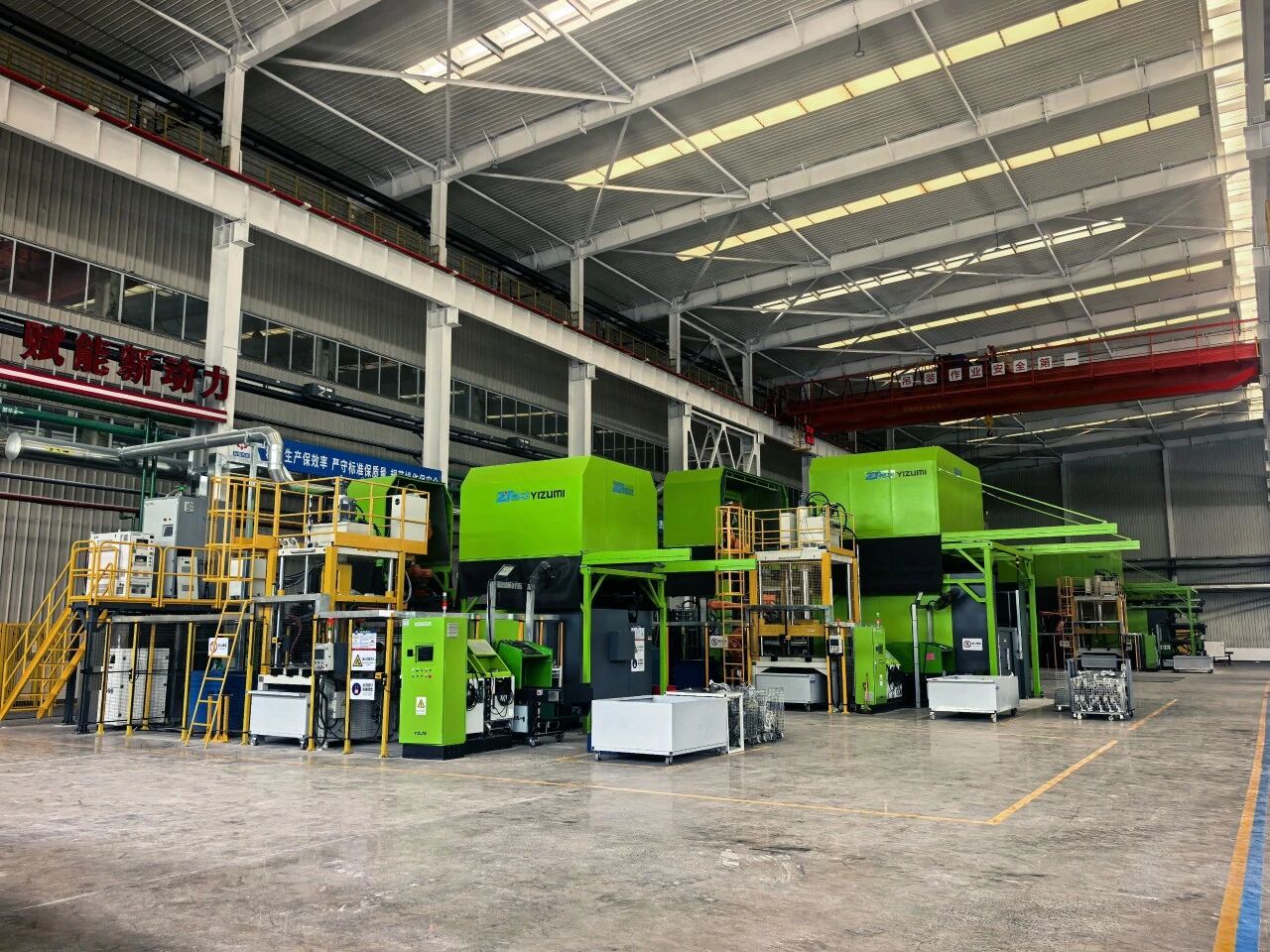
Chongqing Zhuotong Automobile Industry Co., Ltd., a WULING subsidiary
01.「From Hours per Part to Seconds」
Chongqing Zhuotong Automobile Industry Co., Ltd., a subsidiary of WULING, has completed the first delivery of a magnesium alloy frame for an embodied robot. The achievement marks a new application for YIZUMI MGⅡ·Plus series Thixomolding machine in the production of complex robot structures.
For years, robot frames have largely relied on CNC machining of aluminum alloy plates or bars. While mature, the process can take several hours per part, with material utilization below 30%. Tool accessibility also limits the freedom to produce complex, topology-optimized structures.
Conventional liquid magnesium alloy die casting presents a different set of challenges. Poor flowability, rapid oxidation at high temperatures and high solidification shrinkage can lead to porosity and shrinkage defects, making stable mass production difficult.
These limitations have kept many robot frame projects at the small-batch prototyping stage. A more efficient and scalable forming process was needed.
02.「Thixomolding Technology for Complex Magnesium Structures」
WULING, drawing on decades of experience in automotive lightweighting, worked with YIZUMI's technical team to apply Thixomolding technology to embodied robot frames.
Unlike conventional liquid die casting, semi-solid slurry features a globular microstructure and flows more steadily during filling, avoiding turbulent air entrapment and reducing the risk of porosity.
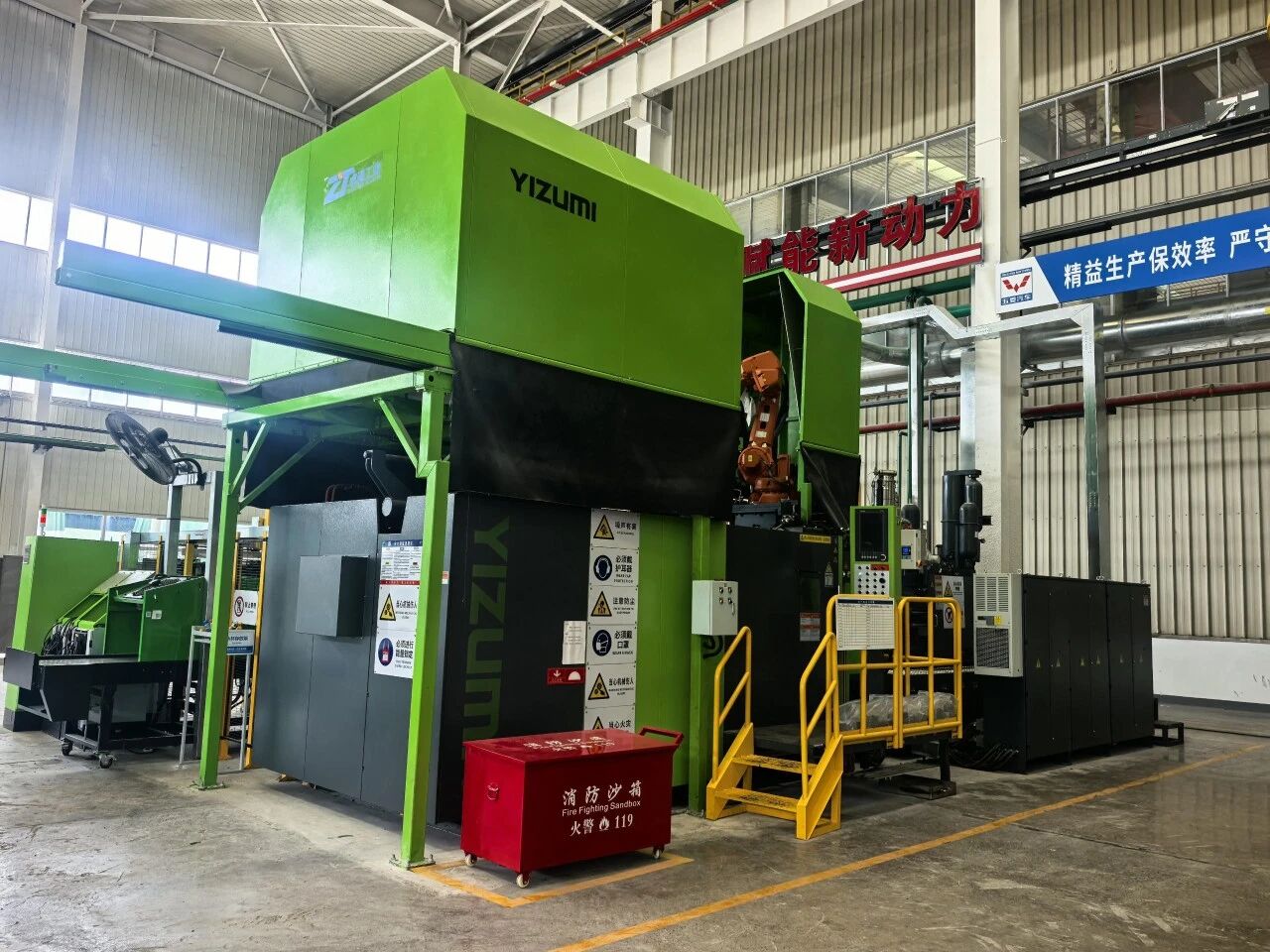
YIZUMI's equipment integrates closed-loop control of injection speed, material temperature, holding pressure and mold temperature, addressing key challenges such as incomplete filling and insufficient internal density in large, thin-walled and complex robot frames. This helps ensure structural integrity and consistent mechanical performance.
For components featuring multiple curved surfaces and irregular openings, YIZUMI also worked with WULING on customized parting solutions and vacuum venting systems. These measures help reduce casting defects and achieve high-precision matching at critical assembly interfaces.
WULING currently operates a portfolio of YIZUMI MGⅡ·Plus Series Thixomolding Machines ranging from 850 to 3,600 tons, covering applications from precision robot joints to large body structures. The equipment portfolio also supports new energy vehicle components and other semi-solid forming applications.
03.「From Prototyping to Scalable Production」
The project represents more than a process improvement. It changes the production economics of robot frames.
By replacing CNC material removal with near-net-shape semi-solid forming, material utilization increases from below 30% to more than 65%, while production cycle time is reduced from several hours per part to tens of seconds. The result is lower unit cost and greater flexibility for complex structures, creating the conditions for scalable production.
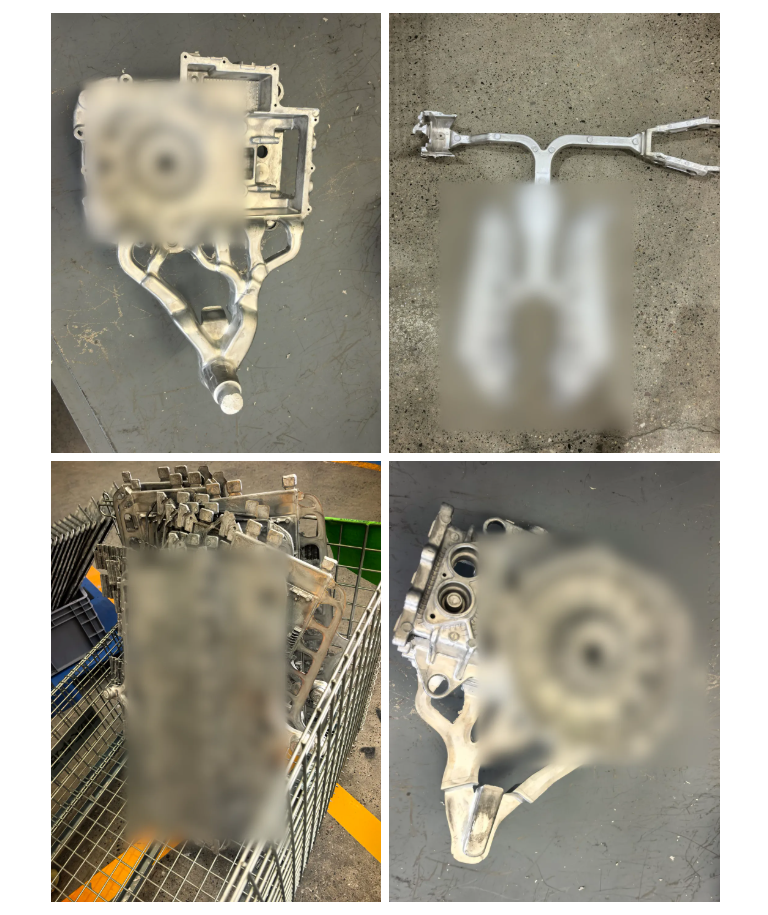
The magnesium alloy frame also delivers significant lightweighting benefits. Compared with conventional aluminum alloy designs, the magnesium alloy solution reduces overall weight by more than 30%. Combined with topology optimization and targeted structural reinforcement, it also provides improved vibration damping and electromagnetic shielding.
A micro-arc oxidation process further enhances wear and weather resistance, supporting greater mobility and longer operating time for robots working in dynamic environments.
04.「Extending Lightweighting Technology to New Applications」
YIZUMI's technical team was involved from the start of the project, working with WULING to develop and validate the YIZUMI Thixomolding technology for embodied robot frames. The successful delivery demonstrates the feasibility of the technology for large, thin-walled and complex magnesium alloy structures, while highlighting its potential beyond automotive applications.
Building on its experience in automotive lightweighting, YIZUMI is extending magnesium alloy die casting and semi-solid forming technologies to emerging applications, including embodied robotics, electric two-wheelers and consumer electronics.
The first delivery marks a starting point. YIZUMI will continue to advance its magnesium alloy forming technologies and work with industry partners to move embodied robot frames from prototype to scalable production.

 陕公网安备61080002000100号
